
Virginia, private property
Dead Animal in an Attic or Garage
Attics and garages put a carcass inside your house or shed, with people and pets close by. VDH's rabies guidance has a specific rule for bats, and VDH's hantavirus fact sheet has a precaution for dead rodents. Anything behind a finished ceiling or wall is information only.
Before you pay anyone. If the animal might be a bat, read VDH's bat rule first. VDH says direct contact with a bat where a bite cannot be ruled out, or someone in a room with a bat who cannot tell whether exposure occurred, such as an infant, a cognitively impaired person or a sleeping adult, counts as potentially exposed. Ask your local health department. DWR's bat page says VDH recommends having a bat found indoors with people tested for rabies.
What this covers
- A carcass lying in an accessible attic space
- A carcass on a garage floor or on a garage shelf
- A carcass on the open joists of a floored attic
Where the limit is
A carcass sealed in a wall, soffit or ceiling cavity, which is informational. Opening drywall or insulation that hides it. Live bats or other animals, including bat exclusion, trapping and repairs. Odour treatment of the building.
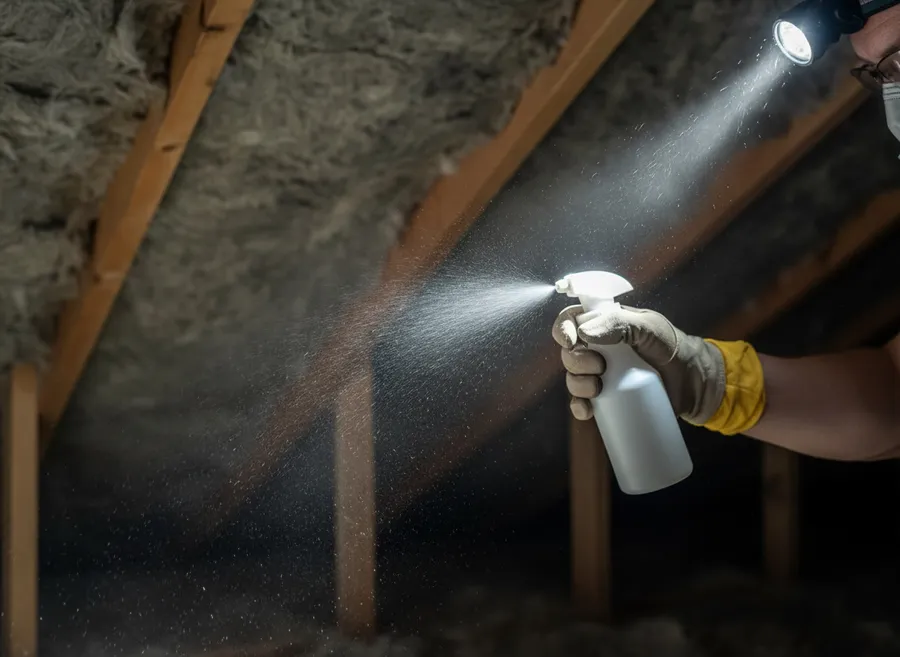
Alexandria Animal Services states it cannot remove wildlife from attics, walls and similar places, and that statement is about live wildlife. For a dead rodent, VDH's fact sheet says to spray the carcass with disinfectant and double-contain it with enough disinfectant to wet it. For a wall, read our article at /blog/dead-animal-smell-in-a-wall/.
No timing is promised. The call settles whether an operator covers the address and what the access allows.
How a call goes
- Say whether the animal is in an attic, a garage or somewhere else.
- Say whether it is a bat, a rodent or something else if you can tell.
- Say how you reach it: a hatch, a pull-down ladder or a garage door.
- Say whether anyone slept in the room or had contact with it.
Questions about this situation
What should I do if a bat was in the room?
VDH's guidelines say a person who had direct contact with a bat and cannot rule out a bite, or who was in a room with a bat and cannot tell whether an exposure took place, should be considered potentially exposed. Call your local health department.
Will someone cut into the ceiling to reach it?
No. An operator here does not open drywall, plaster or a ceiling. A carcass in a sealed cavity is information, not a job.
Is hantavirus a concern in a Virginia attic?
VDH calls hantavirus pulmonary syndrome rarely reported in Virginia. Its fact sheet is general advice for removing a dead rodent and does not say attics here are a hazard.
Not sure this is the right page? Who removes a dead animal in Virginia works through the public and private split, and the locations page sets out what the larger counties and cities publish.