
Virginia, private property
Dead Animal Under a Deck or in a Crawl Space
Under a deck or in a crawl space, the question is whether the animal can be reached. If a person can see it and get to it without cutting anything, it can be a carcass job. If it is behind finished material, it is information on this site and not a service.
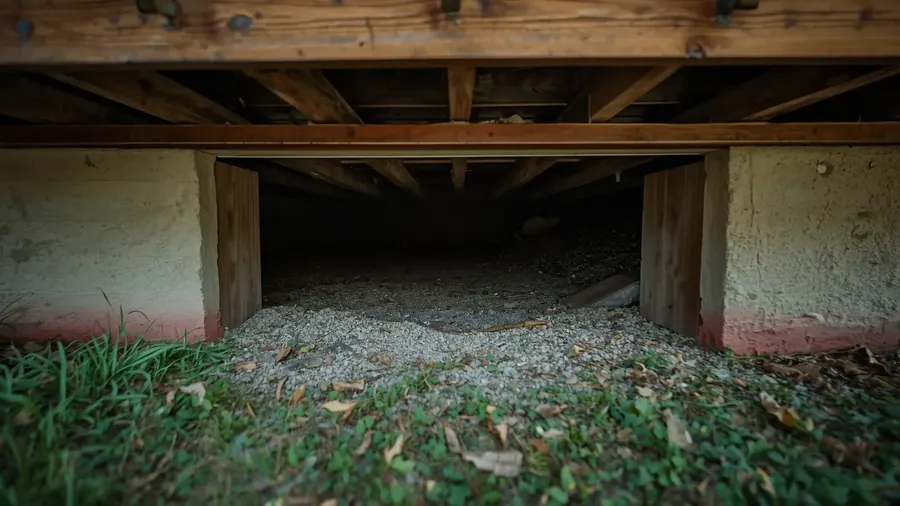
Before you pay anyone. Check whether you can see the animal from the opening. Alexandria Animal Services says it cannot remove wildlife found in attics, walls, unfinished basements, chimneys or on roofs, and that page is about live animals. We found no government service published for carcasses under a structure in the localities we checked.
What this covers
- A carcass beneath a deck, visible from the edge
- A carcass in a crawl space with an open access hatch
- A carcass lying on the soil or gravel of an open under-floor space
Where the limit is
A carcass in a sealed wall cavity or behind drywall, plaster or a ceiling. Opening finished material. Live animals under a building, including trapping, relocation and sealing entry points. Repairing damage.
The question on the call is how far in the animal is and how low the clearance is. For a sealed wall, our article on a dead animal smell in a wall explains why that is information only: /blog/dead-animal-smell-in-a-wall/. No operator on this site opens a wall.
This page gives no timing. What can be done, and when, is decided on the call once access is clear.
How a call goes
- Say where the access point is and how far in the animal lies.
- Say whether you can see it or only smell it.
- Describe any hatch, latch or lattice that has to come off to reach it.
- Send a photo from the opening if you can.
Questions about this situation
Can someone open a wall for a smell?
Not as a service here. We treat a dead animal inside a closed wall as information, and an accessible space is the line.
Is there a state rule on carcasses under a house?
We found no statewide Virginia rule that puts a duty or deadline on a landowner to remove a dead wild animal. The general rules still apply: dead animals may not be put in a cave or sinkhole without the owner's written permission or thrown into state waters.
What about rodents under the floor?
VDH's hantavirus fact sheet describes wetting a dead rodent with disinfectant and bagging it with enough disinfectant to wet it, and says the syndrome is rarely reported in Virginia.
Not sure this is the right page? Who removes a dead animal in Virginia works through the public and private split, and the locations page sets out what the larger counties and cities publish.